
The Longer Version
My path is atypical, but every turn has built on the last. My Master's in Teaching (MAT) focused on instruction in the classroom. My Master's in Education (MEd) zoomed out to the systems that manage performance: standards-based instruction backed by data meaningful enough to evaluate growth fairly. One taught me to design a lesson; the other taught me the system the lesson lives in. At Endicott, I adapted Joseph Renzulli's Secondary Interest Inventory for international schools, a tool for building curriculum around students' interests and strengths without losing sight of the standard and performance expectation. (Meaning: Nobody would argue that Lin-Manuel Miranda doesn't know early American history. He just proved it through musical theater instead of an essay.
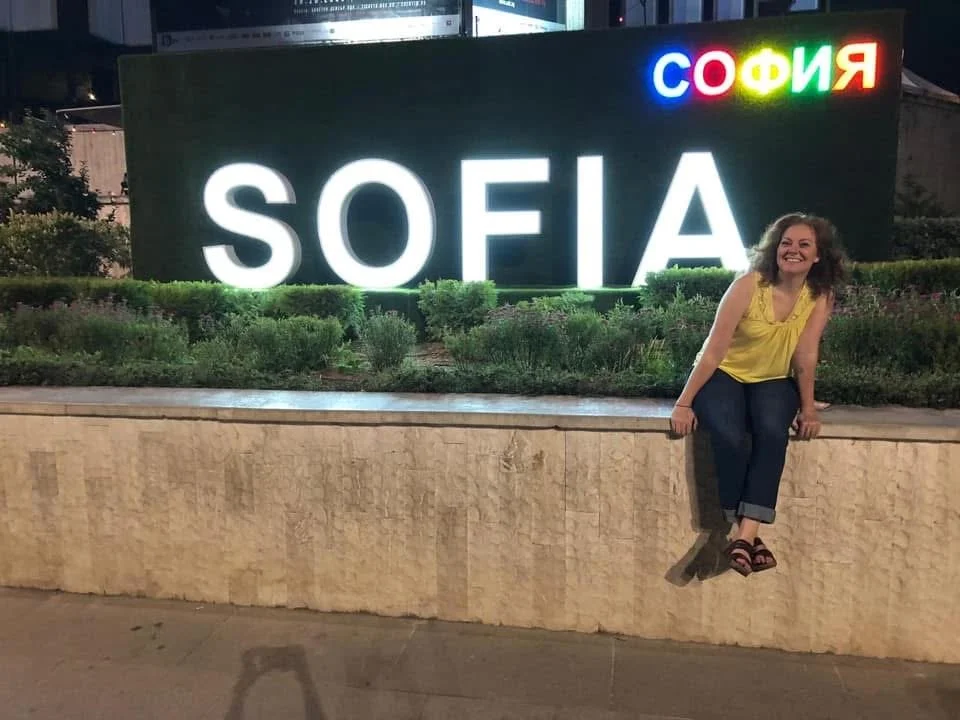
I spent ten years in classrooms: four in New Jersey public schools, four in international schools in Tanzania, Italy, and Bulgaria, and two in Nashville public schools. Every move was an education about education. In New Jersey, I sat on the committee that rebuilt our middle school curriculum around AP-style thinking, designing assessments that asked for understanding and argumentation over rote recall. Tanzania introduced me to the IB Middle Years Programme, a program that prioritizes thematic instruction over chronological, providing a framework to study trends and patterns over time and distance. In Rome, my students knew thousands of years of history and hated it when I asked whether an answer was historically defensible instead of right. Bulgaria showed me what social studies looks like when history, economics, and geography run through every course instead of living in separate ones.
Then I took all of it into business. I worked directly for two Nashville founders, first as Director of Learning and Development at BrainTrust, then as Chief of Staff turned Director of Education at Mental Metrix. At BrainTrust, my role was responsible for the onboarding of members. Part of that onboarding process included training on the proprietary meeting protocol used to accelerate business growth. This included developing skills like listening for understanding, accountability, and providing feedback for growth. At Mental Metrix, I worked directly with our Chief Psychologist to understand technical mental performance analytics and reporting for professional and collegiate athletes. These reports provided coaches, athletic directors, and general managers the data they needed to build and maintain high-performing teams.
In addition to all I learned in those roles, I watched budgets and project plans get built line by line. In a company that small, everyone wears a lot of hats. I helped build investor and marketing decks, negotiate contracts, and manage vendor relationships. My L&D hat was always the one I wore most visibly, but it's hard to argue for an LMS when a new market needs the money.
Serving as the Director of Education at Mental Metrix became the springboard to where I am now. I cut my teeth running discovery conversations and translating a clinical, data-heavy product into something a buyer could picture using. I wasn't good at it yet. But I recognized the work, because I'd learned it in a classroom first.
One of my favorite classroom memories came when a student announced, loudly, that my class irritated her. We'd started the year bristly, so teenage attitude was nothing new between us. We were reading Elie Wiesel's Night and she was furious: "It's like you're trying to tell us about today and things that matter today, but you're using old stuff to do it." Her disgust had nothing to do with me or the class. She'd seen something she had never seen before, patterns in history, and she didn't like it. I never needed her to reach a particular conclusion. I needed her to make a claim and defend it with evidence. She named a pattern and backed it up. The standard was Continuity and Change Over Time, and any content could have demonstrated it. She just found the content that mattered to her. Selling works the same way. Nobody buys because you told them to. They buy when they see the value for themselves.
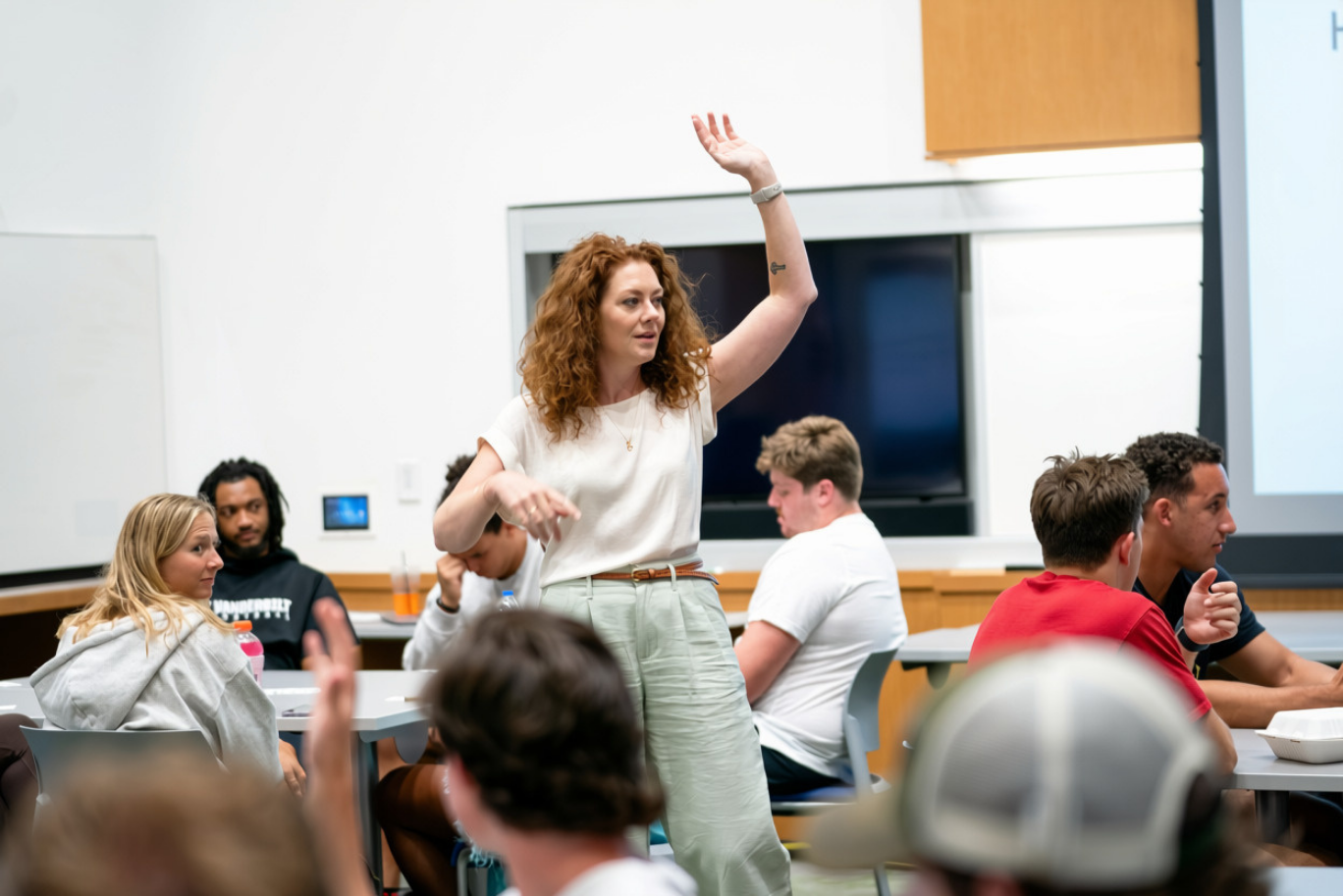
With all that, there is a through-line. A classroom, a startup, a sales floor: the people change, but the work doesn't. Decide what good looks like, write it down where everyone can see it, and build backward from there.
This blog is where I show my work.
What’s In A Name?
It’s great to meet you! Or, in Italian, Piacere!
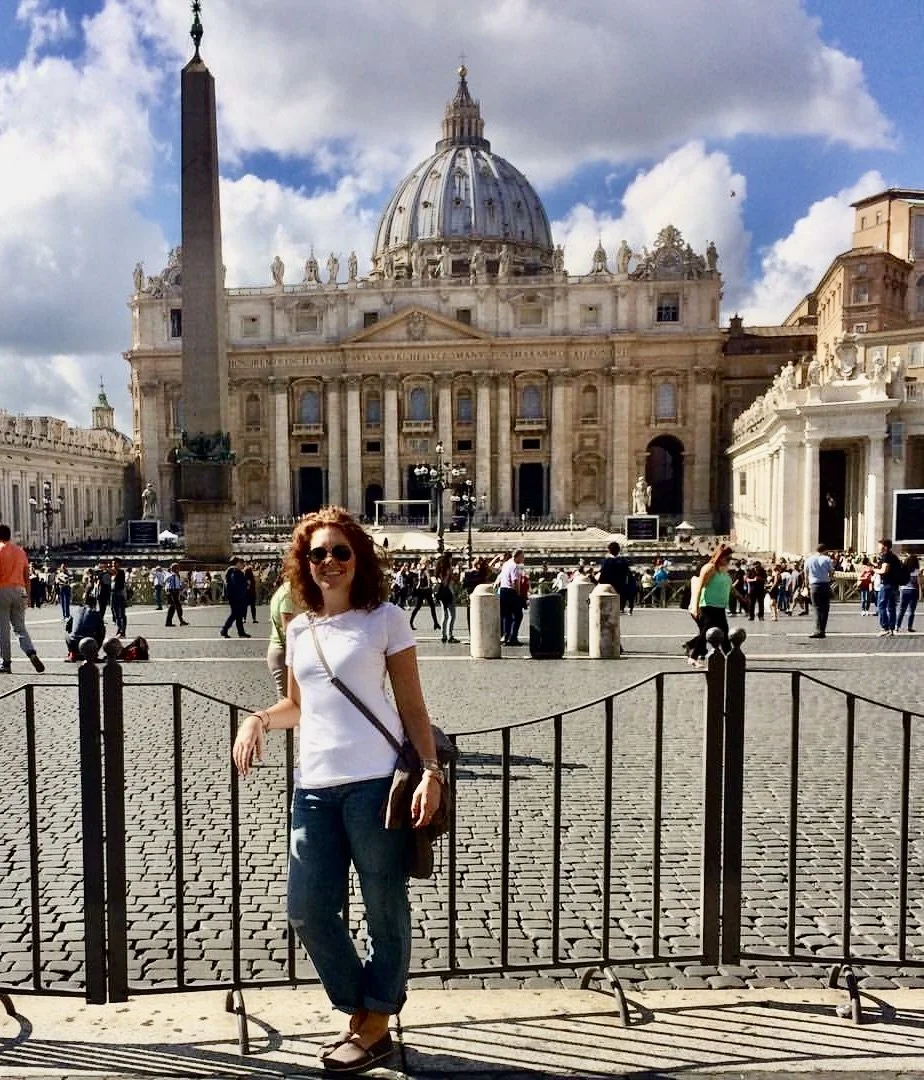
I had an amazing opportunity to live and work in Rome, Italy for a few years. I wish I could say I left fluent in Italian, but it simply wasn’t in the cards for me. I did come back with a deep appreciation for several Italian words that I still use in my daily life - mamma mia being a go-to fave.
Allora is one of those words that have a permanent place in my day-to-day vocabulary.
Technically, allora is a verbal pause - it doesn’t really mean anything. But it does indicate to the person you’re talking to that you need a quick second to think. With a single word, allora says “I just need a moment to think so I can get this right.” For me, I mostly used this phrase before ordering something from a restaurant or coffee shop. Being conversational in Italian but not fluent, words didn’t always flow naturally. Starting with a quick allora was how I took a breath, made sure my phrasing was correct, and settled my brain to anticipate possible follow-up questions. It also indicated to the person I was speaking to that I had enough understanding of the language to borrow some mannerisms and I was trying to communicate authentically.
To me, this quick word to says so much - “I’m not wasting your time. I need one moment to gather my thoughts. Aw, shucks, I thought I knew what I wanted to eat, but all the different pizzas on display look great and now I don’t know which one I really want.” Okay, that last one was definitely the most common use for me!
Allora Learning borrows its name from this concept. I want just a bit of your time - a moment - to help you and your team do better thinking. To get the phrasing right. To prepare for possible follow-up conversation. And maybe also decide which type of pizza we’re craving for our working lunch!
Your partner in learning,
Jess